Search for “how to check pure honey” and you will find the same handful of kitchen tricks: drop it in water, try to light it, smear it on your thumb. They are easy, they feel scientific, and most of them tell you far less than they promise. This guide explains what each test actually measures, why adulterated honey can pass all of them, and what a buyer can check instead.
Why honey is so often faked
Honey is expensive to produce and cheap to imitate. A jar is mostly sugar and water, and sugar syrups made from rice, corn or cane can be engineered to match honey’s sweetness, thickness and even parts of its chemistry. Because the fraud happens at the level of molecules, the honey can look, pour and taste right.
This is not a theoretical worry. In December 2020 the Centre for Science and Environment (CSE) published an investigation in which samples from 10 of 13 Indian honey brands failed Nuclear Magnetic Resonance (NMR) testing at a German laboratory, even though most of the big brands had passed the standard Indian tests for cane and corn sugar. Several of the brands disputed the findings, but the investigation showed something every buyer should know: a honey can pass basic checks and still contain syrup.
The popular home tests, one by one
The water test
The claim: pure honey sinks to the bottom of a glass of water in a lump, while fake honey dissolves. In practice, any thick, dense syrup sinks too, and all honey dissolves eventually if you stir. The test mostly measures viscosity and moisture, not purity.
The flame test
The claim: dip a matchstick or cotton wick in honey and it will still light, because pure honey has no added water. A honey with high moisture can make the match sputter, but a syrup boiled down to the same thickness lights just as well. At best it hints at water content.
The thumb test
The claim: a drop of pure honey stays put on your thumb, while fake honey spreads. Again, this is a test of thickness. Temperature changes the result more than purity does: the same honey behaves differently on a cold morning and a hot afternoon.
The crystallisation test
Real honey does crystallise, and crystals are a good sign that a honey has not been heavily heated or ultra-filtered. But some syrups crystallise as well, and some genuine honeys stay liquid for a long time. We explain the chemistry in why raw honey crystallises.
What actually proves purity: the lab
India’s food regulator, FSSAI, sets the composition honey must meet, and the tests that matter are done with laboratory instruments. The FSSAI manual of methods for honey lists dozens of them. The ones worth recognising on a report are:
| Check | What it catches | What to look for |
|---|---|---|
| Moisture | Watered or unripe honey that can ferment | No more than 20% |
| Sucrose | Added table sugar | Low; FSSAI caps most honeys at 5% |
| C4 sugar | Cane or corn syrup | Within the FSSAI limit (7%) |
| HMF | Overheating or old stock | Low; FSSAI allows up to 80 mg/kg |
| Foreign oligosaccharides, SMR, TMR | Rice and other modified syrups | Reported as not detected or within limits |
| NMR | Many syrups at once, and origin | A pass from an accredited lab |
NMR deserves a note. It compares a honey’s full molecular fingerprint against a database of genuine samples, so it can catch syrups designed to slip past the single-marker tests. India has required NMR for honey exported since August 2020, but it is not mandatory for honey sold within the country, which is why it rarely appears on domestic labels.
How to buy honey with confidence
- Ask for the lab report, not just a claim. A brand that tests will show you the document, ideally from an accredited (NABL) laboratory.
- Prefer single-origin, raw honey. A honey that names its flowers and region is harder to blend anonymously than “pure honey” from nowhere in particular.
- Expect seasonal variation. Genuine honey changes colour and taste from harvest to harvest. Perfect uniformity across years is a small warning sign.
- Be wary of very low prices. Real honey costs real money to produce. A price far below the market is often subsidised by syrup.
- Read the ingredient list. It should say honey and nothing else.
How we approach it
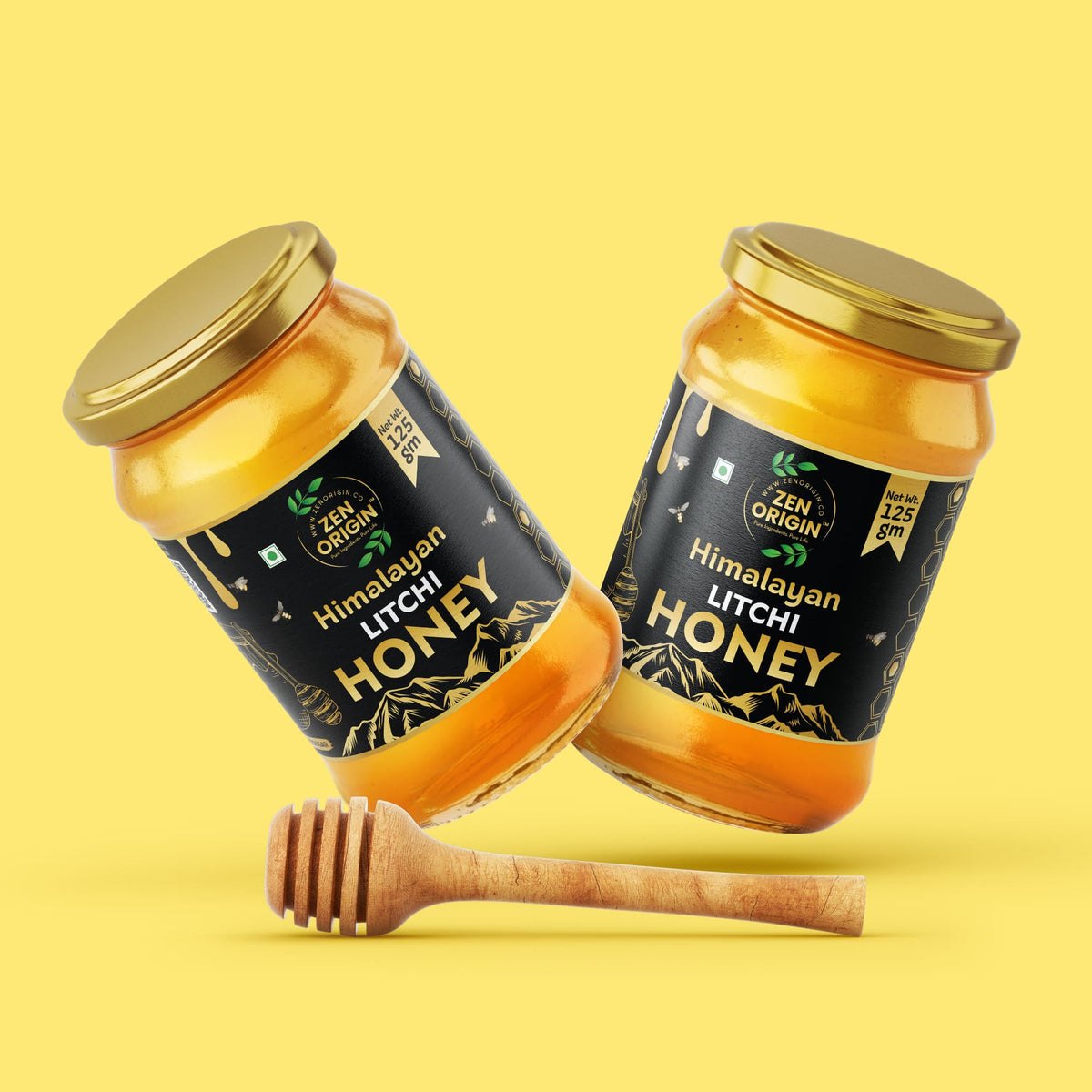
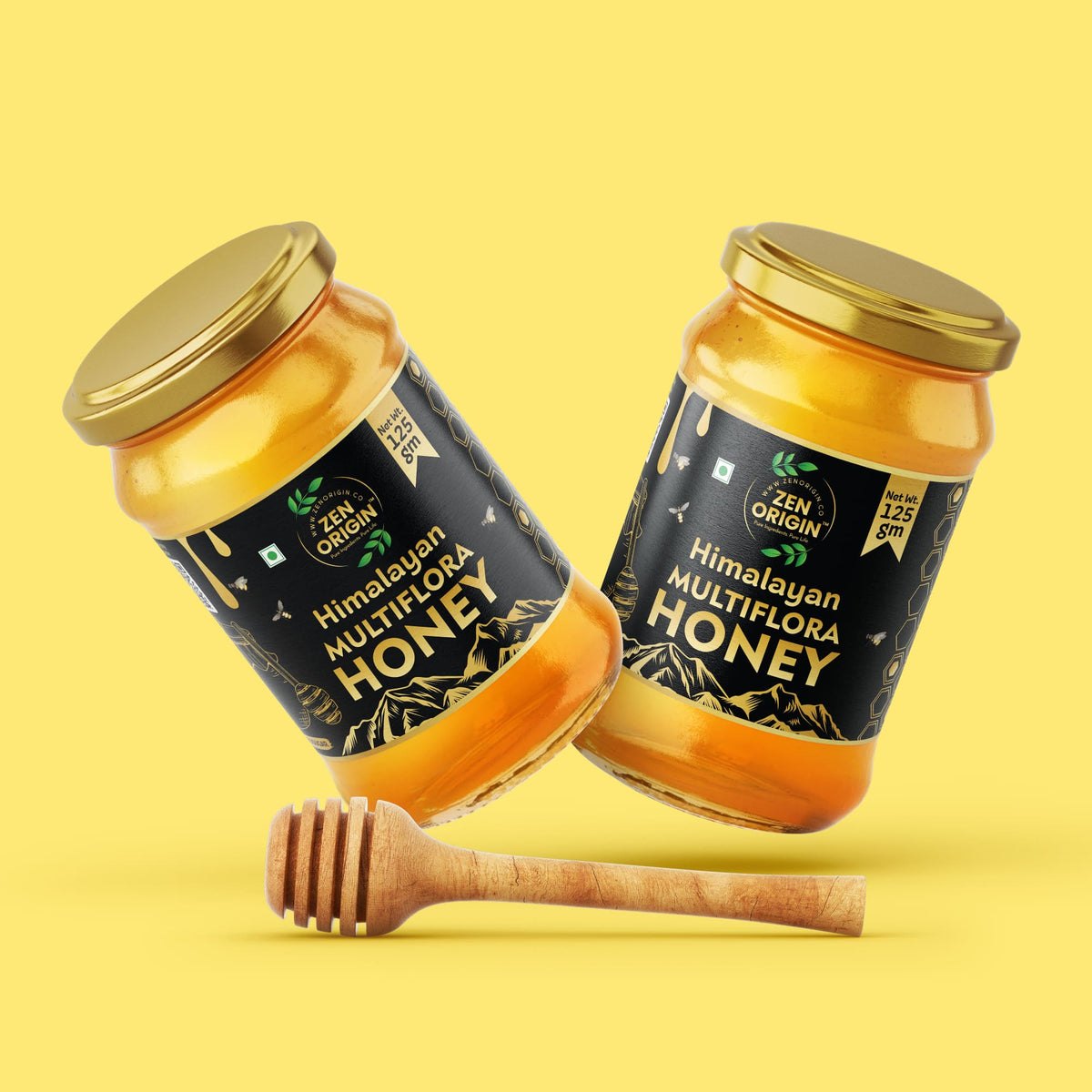
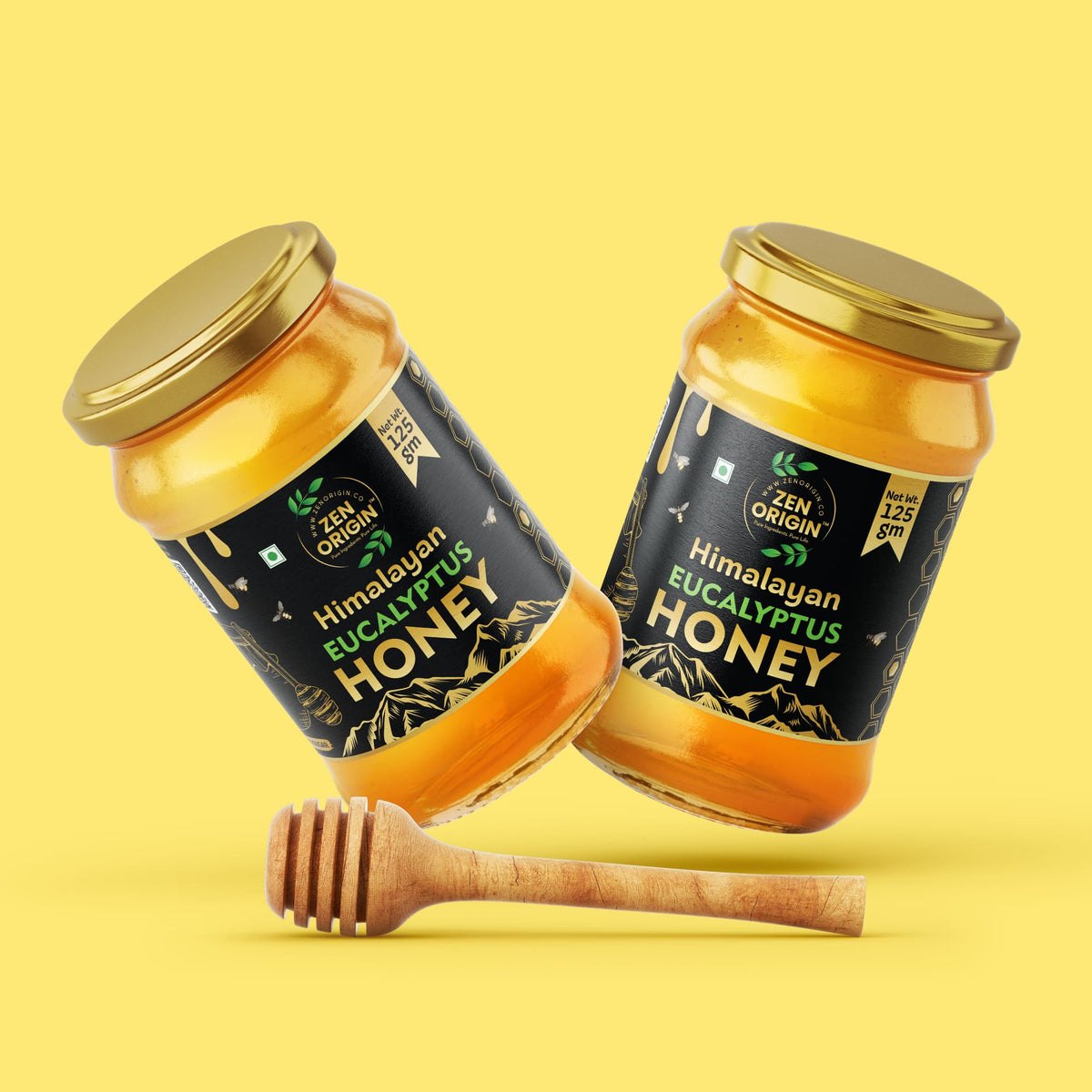
Our three honeys come from hives in the Kangra Valley in Himachal Pradesh. Each is cold-extracted, lightly strained to remove wax and jarred without heating or blending, and every batch is lab-tested. You will find the report linked on each product page: litchi, multiflora and eucalyptus. If something on a report is unclear, write to us and we will walk you through it.